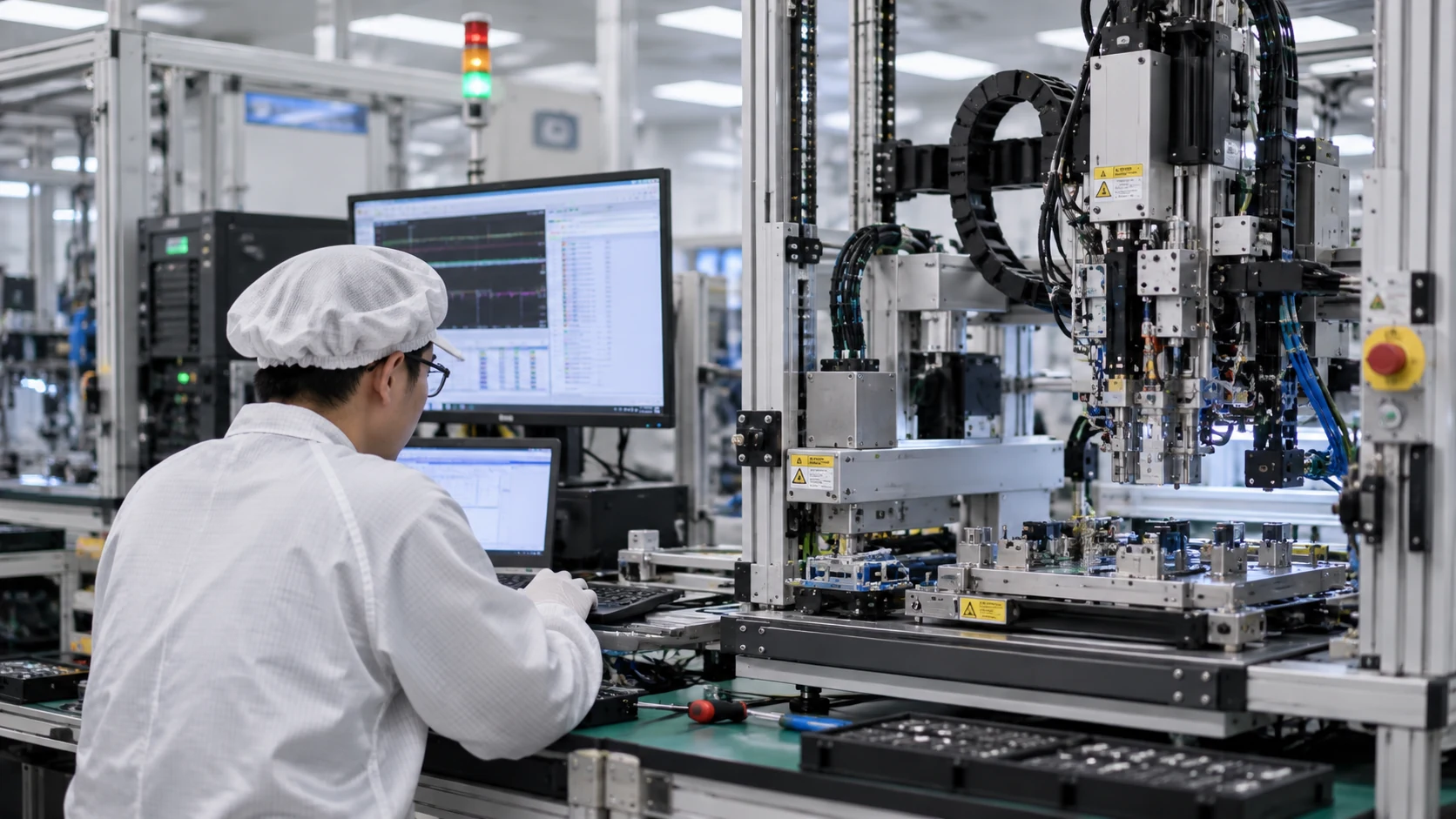
Brain brings machine reasoning to the unplanned downtime
Brain gives equipment the ability to explain its own alarms, deviations and process/test results. It derives the machine's knowledge from the observables (logs, telemetry, sensor readings) and design artifacts (code, DFM, FMEA) that already exist, so the unplanned event still gets an explanation at the tool.
- Replay of machine states and signals around any event
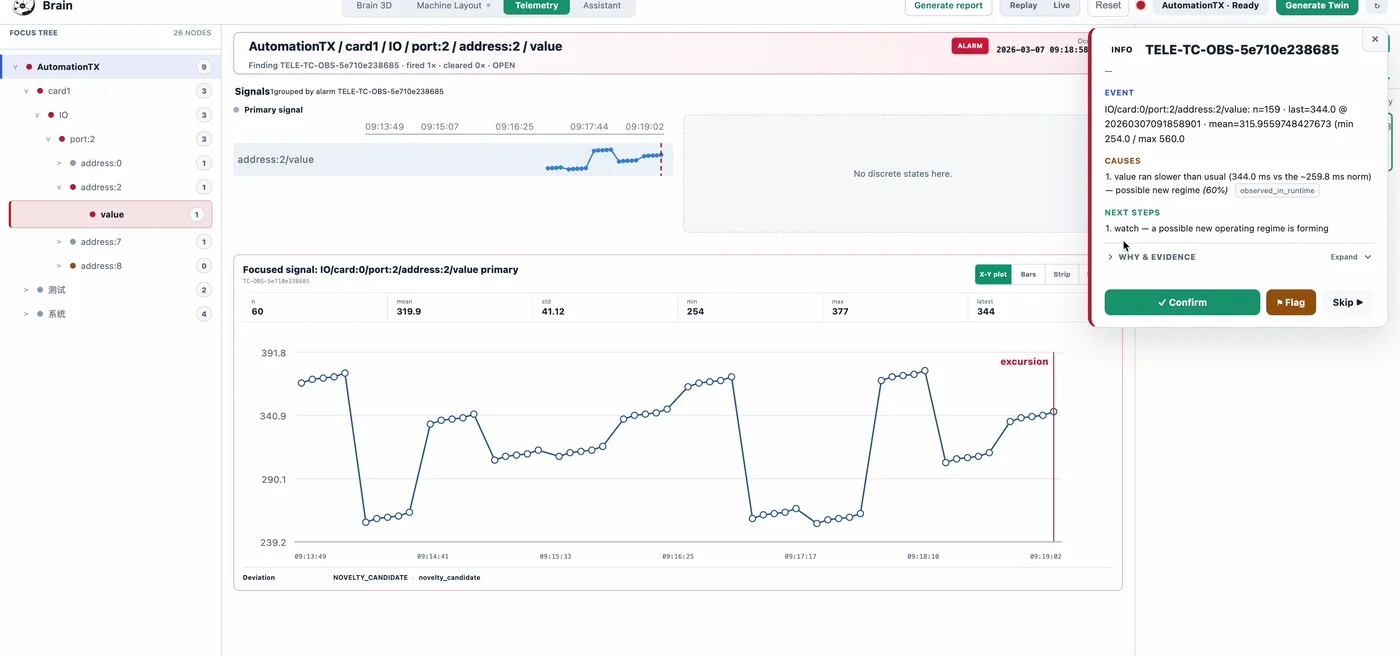
- The alarm with the events that preceded it, candidate causes ranked against the signals
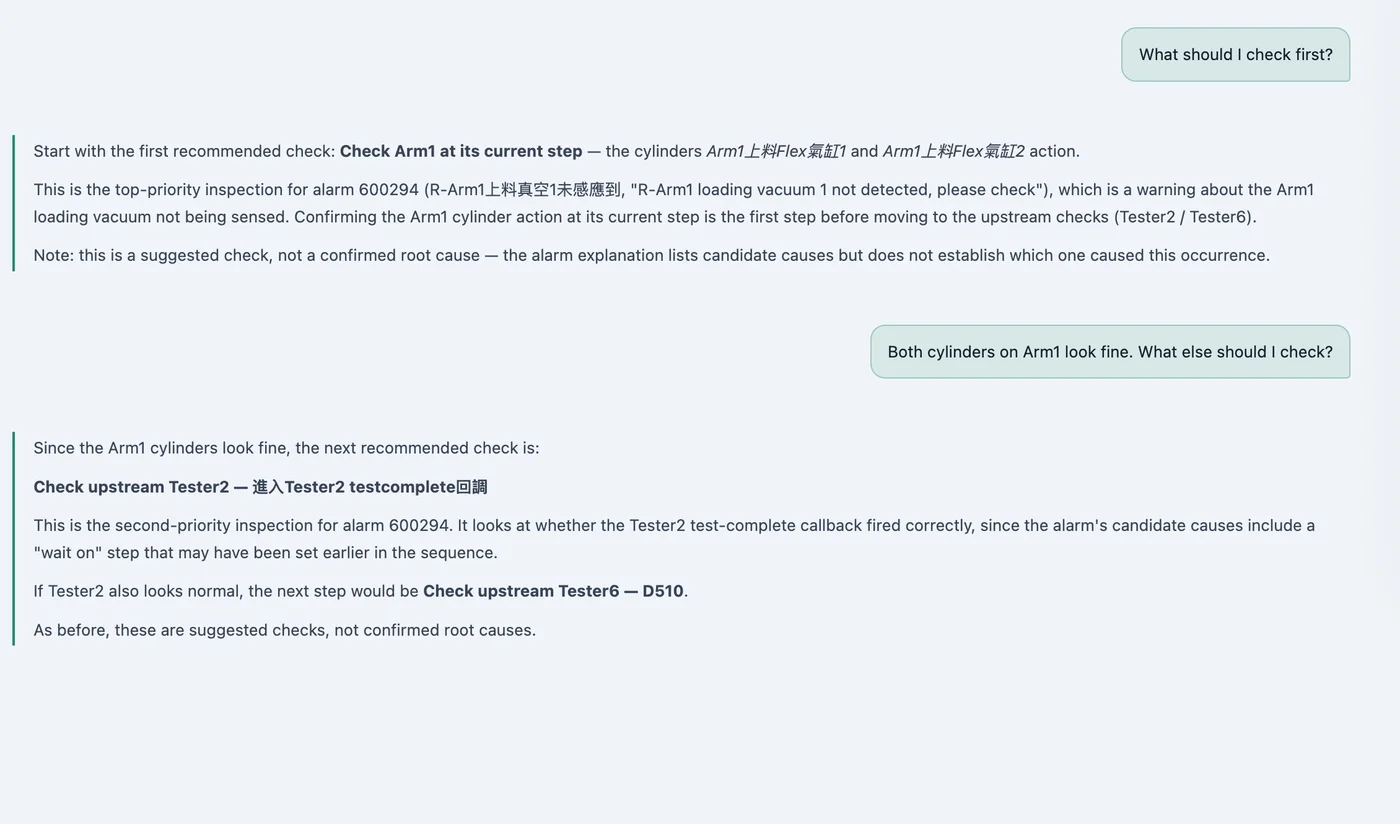
- Suggested checks in order, each with its evidence, in English or Chinese
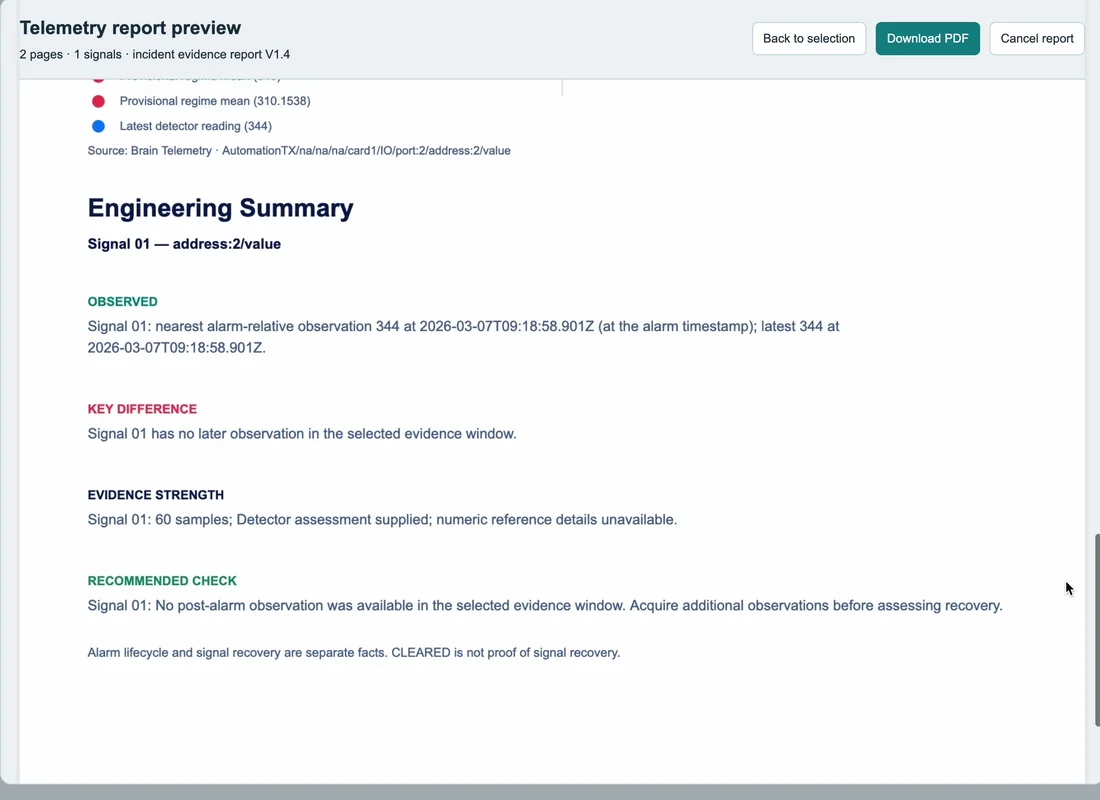
- Evidence and DOE reports compiled from the data; the decision stays with the engineer

EQUIPMENT RE-QUALIFICATION
Finding what a firmware update changed
A firmware update goes in and no alarm comes up. Brain replays the run against the baseline and narrows the difference to a time window and a signal, with the evidence report compiled from the data.
PRODUCTION MONITORING
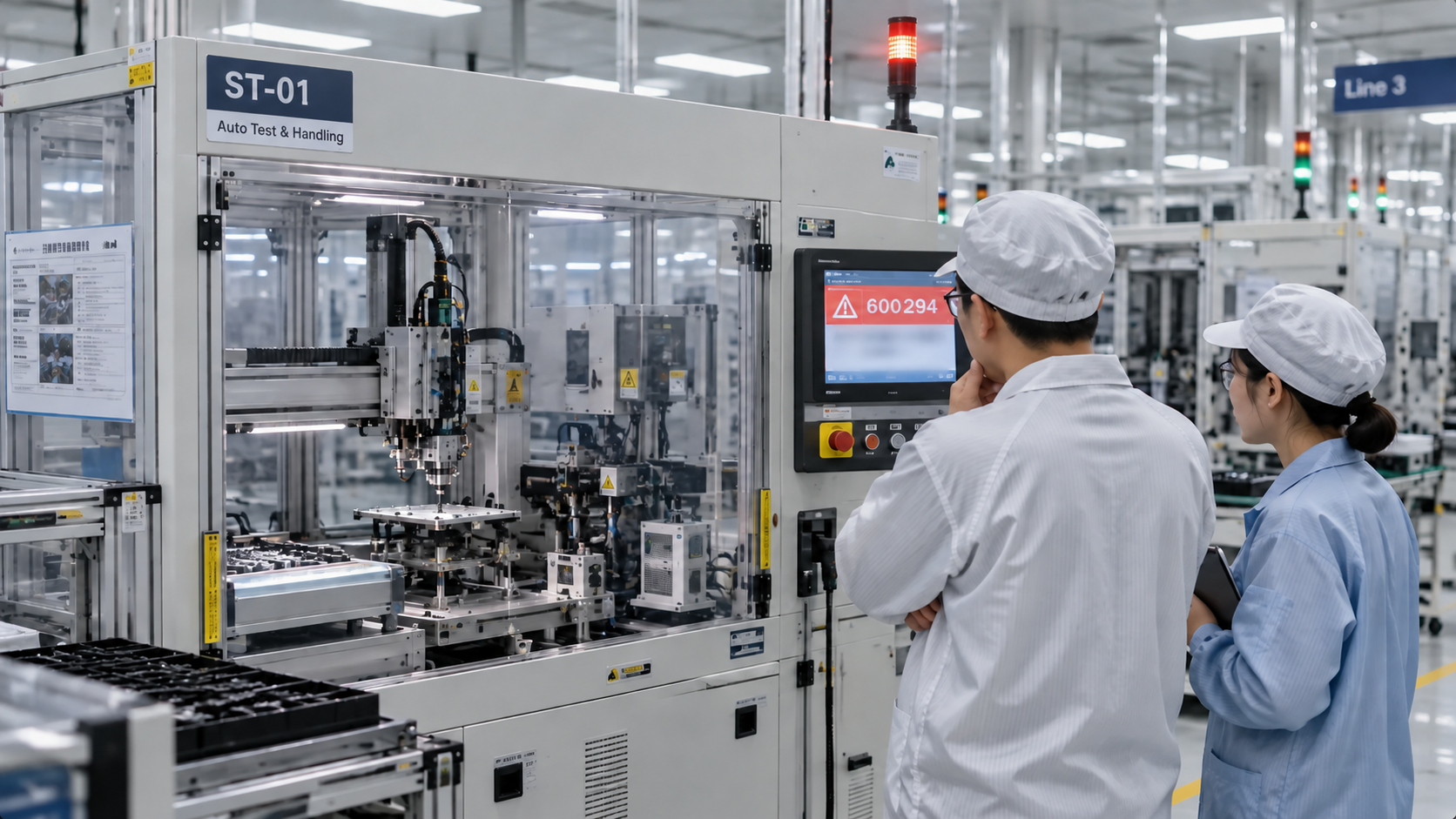
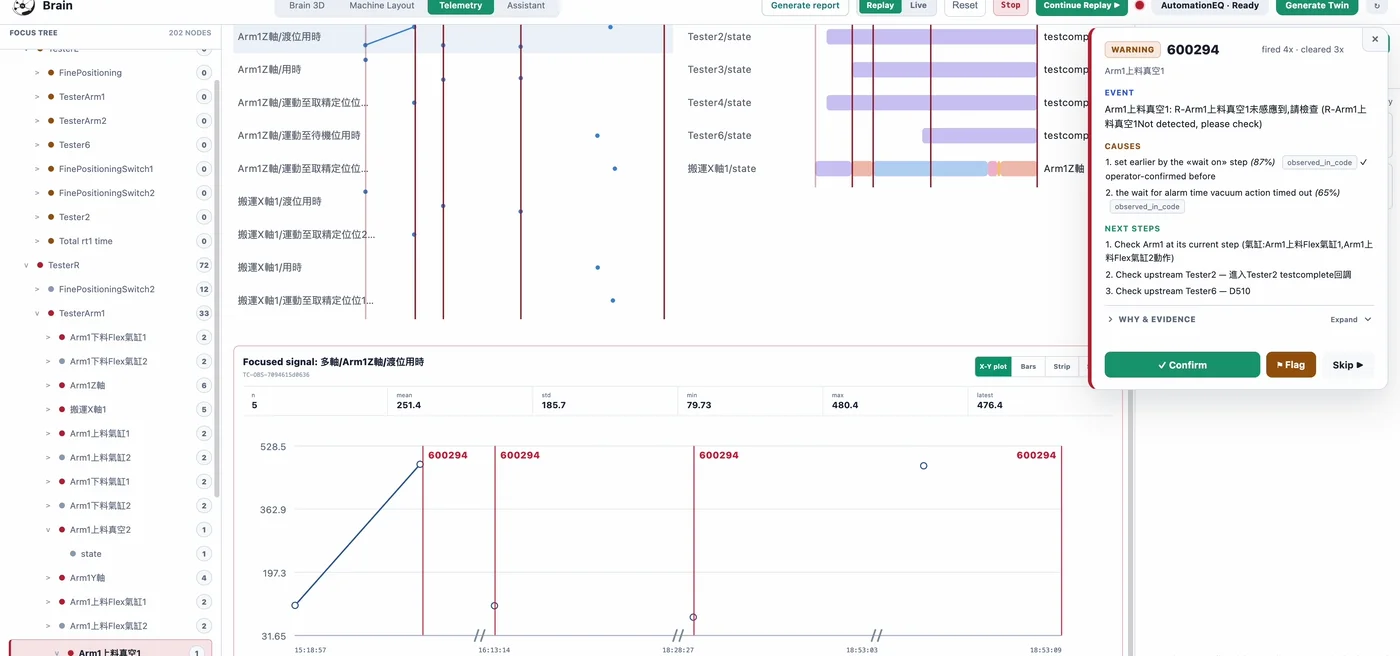
Alarm 600294 on night shift
Alarm 600294 stops the handler at night, and the code says only what tripped. Brain lists the candidate causes in order, each tied to its program step and log lines, and the technician takes the first check with the evidence in front of him.
DOE VALIDATION
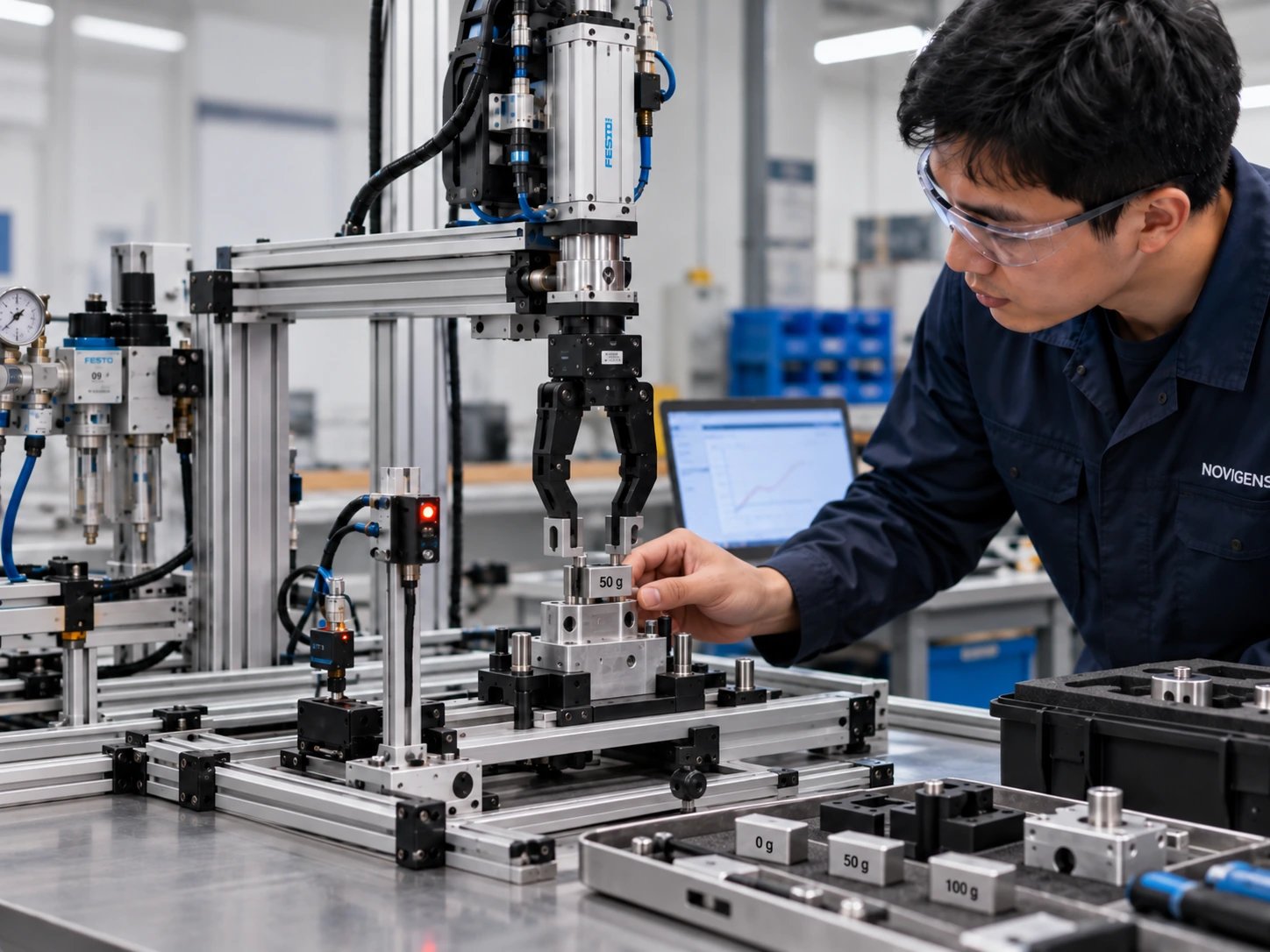
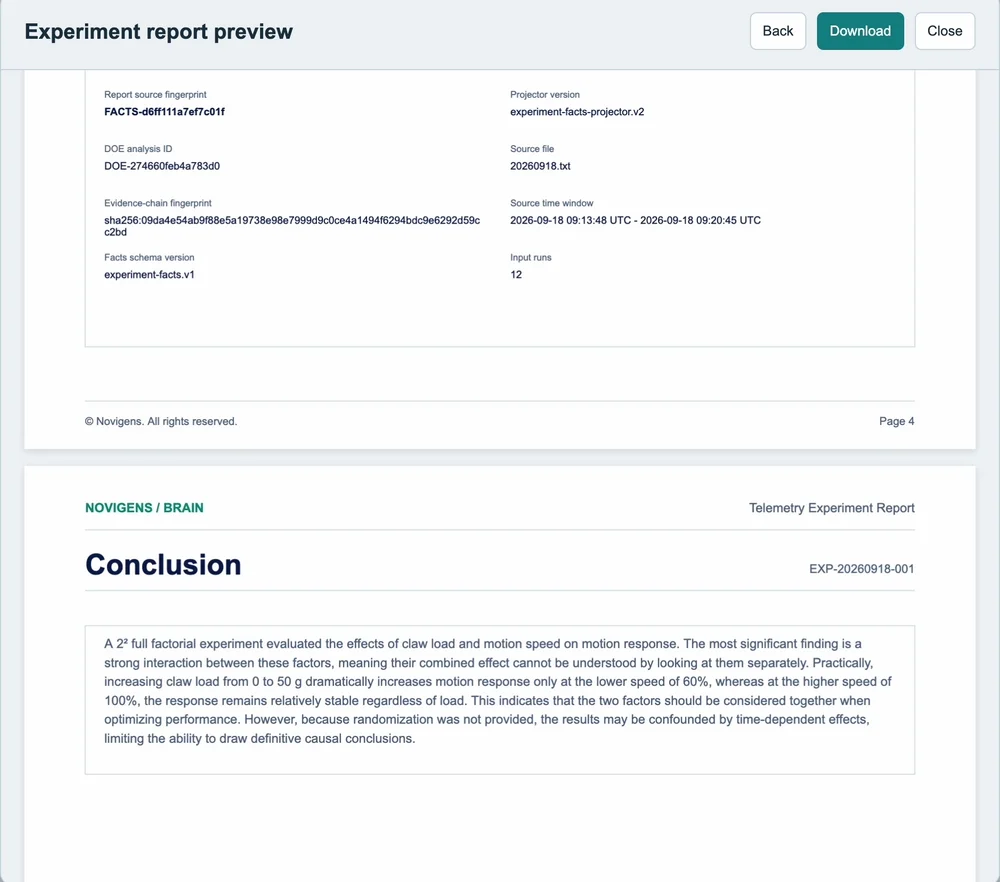
Twelve load tests on a gripper module
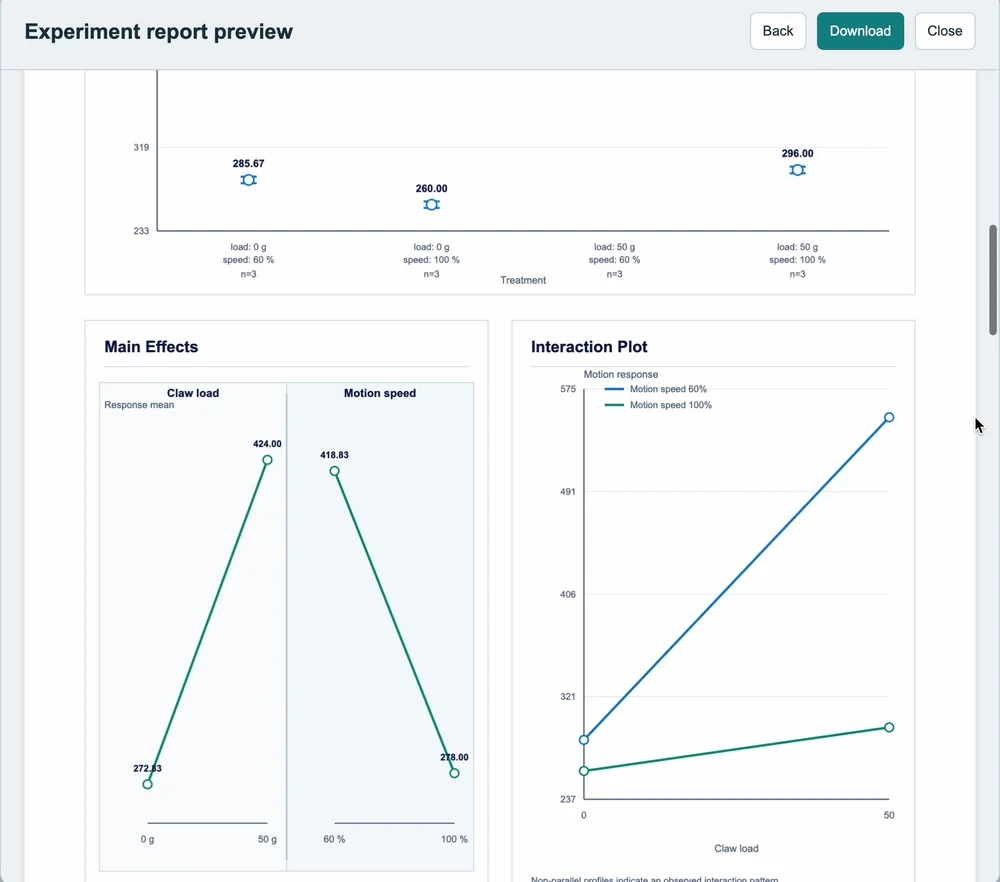
Twelve load tests on a gripper module sit in CSV files. Brain validates the runs, builds the factorial comparison across load and speed, and writes the conclusion with the limits of the data stated.
DEPLOYMENT
Brain on the floor
Brain runs on a Mac mini class edge computer inside the trusted factory zone, next to the SCADA or controller: read-only, no internet connection, design artifacts and data stay with their owner. For equipment manufacturers, Brain can ship preinstalled.
FAQ
Frequently asked questions
Does Brain replace our SCADA or OEE system?
No. Those systems record what happened and what it cost. Brain works alongside them on why, and can return its findings to them through an API.
Does Brain ever control the equipment?
No. Brain is read-only by design and does not attempt to control the equipment directly, for regulatory reasons. It runs fully on the edge, locally, so the manufacturer's sensitive IP never leaks to the cloud.
Is the IP secured?
Yes. In operation, Brain runs inside a secured, trusted zone on the Mac Studio that hosts it. The equipment OEM has no access to the factory's recipes or operational logs; the factory or manufacturer has no access to the equipment OEM's code, design documents or machine know-how; and Brain runs autonomously, with active learning observing and extracting knowledge from both, while Novigens has access to neither, nor to the knowledge Brain has acquired.
Does Brain suffer from "hallucinations", the common limitation of LLMs?
No. Brain is designed from first-principle Markov decision processes, a different kind of machine learning. It is not the same architecture as a large language model, a limited form of AI that suffers from hallucinations, and all of Brain's derived knowledge carries provenance to its evidence source.
How is the program measured?
By one number agreed before it starts and compared with the preceding period: engineering hours spent in logs per incident, time from alarm to the first correct check, or time to sign-off after a change.
How do we get started?
With one machine class. For the first result, a representative, least-restrictive sample of its design artifacts under NDA (a code module or two, the alarm list, a process specification) and the observables from a past stop or an unanalysed test. Once deployed, Brain derives the full model locally, on site. Without your permission, Novigens has no access to the derived, optimised model.
Start with
one machine class.
A representative sample of its design artifacts under NDA and the observables from a stop nobody could explain. Novigens runs Brain on them and reports what it found. Once deployed, Brain derives the full model locally, on site. Without your permission, Novigens has no access to the derived, optimised model.